Portal, AZ - Rodeo, NM
Serving The Communities Of Portal and Rodeo (www.portal-rodeo.com)
Serving The Communities Of Portal and Rodeo (www.portal-rodeo.com)

Hiking
October 29 - Hiking Up High To See Fall Aspens
Meet: Silver Peak Trail at 8:00 a.m. AZ, 9:00 a.m. NM.
Carol Simon (520) 558-2433 casimon1947@icloud.com
Elaine Moisan (520) 558-5204 emoisan2011@hotmail.com
Elly Van Gelderen (520) 558-3715 or ellyvangelderen@asu.edu
__________________________________________________________________________
Click On Any Image To See It In Its Original (Larger) Size
Hike Report, 10/22/26 - Ash Spring loop
We know we said we would go to the Crest of the Chiricahuas to look at the aspen trees turning color but the weather forecast was bleak and we expected the 42 Road to be muddy and the last thing that poor road needs is ruts in addition to rocks. So, we agreed to a local hike to spare our tires and the 42 Road. The weather turned out to be rather nice, and we could see stands of golden aspen high above our route. Almost as good as being there.
Several of our winter residents have returned and rejoined the regular hiking group. All are welcome. We hiked a different route: starting at the old John Hands campground, we crossed the middle fork of Cave Creek and headed up the “fence line trail”. It is in good shape with only 1 “step-over” log.
We recrossed the middle fork and took the Ash Spring side trail up the low hills.
Ash Spring pools all were full, but no Chiricahua leopard frogs were seen.
After a rest and snacks we continued the long way to the Greenhouse Road for lunch. Most hikers continued up the Road to Greenhouse Creek - which was dry. The group returned down the roads to John Hands for about a 6 mile hike.
Next week we again plan to travel to the high country to enjoy the aspen trees turning color. Today we could see some trees were still green and since no extreme cold temperatures or strong winds are predicted we expect to have our eyes knocked out by the colors…bring sunglasses, I am. We will meet at 8 AZ, 9 NM at the Silver Peak trail parking lot. Bring water, lunch, hat, sun protection (as most of the hike will be at 9,000 ft) and maybe some warmer clothes?
Report by Al, photos from Chuck & Elaine


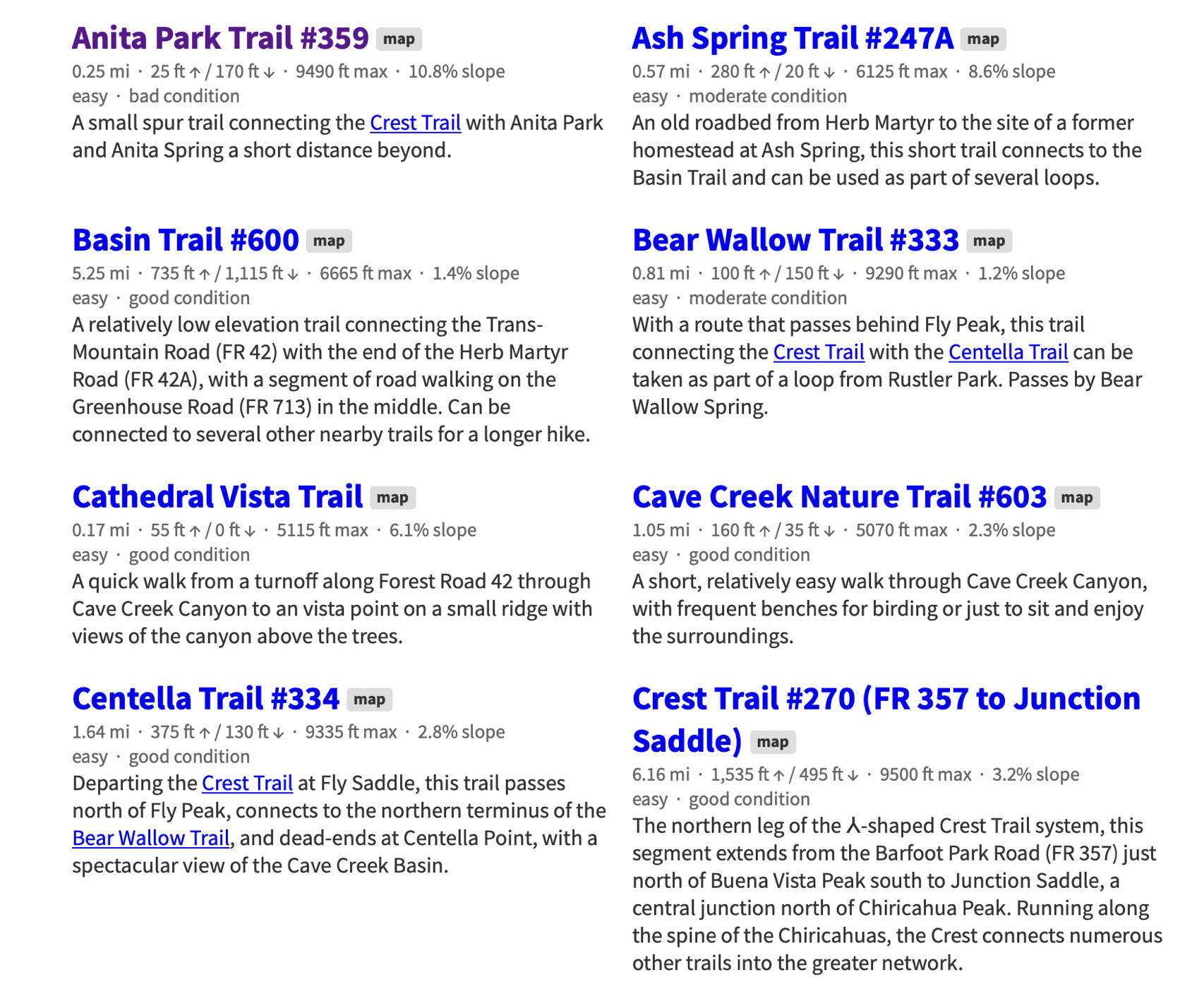
Easy Trails
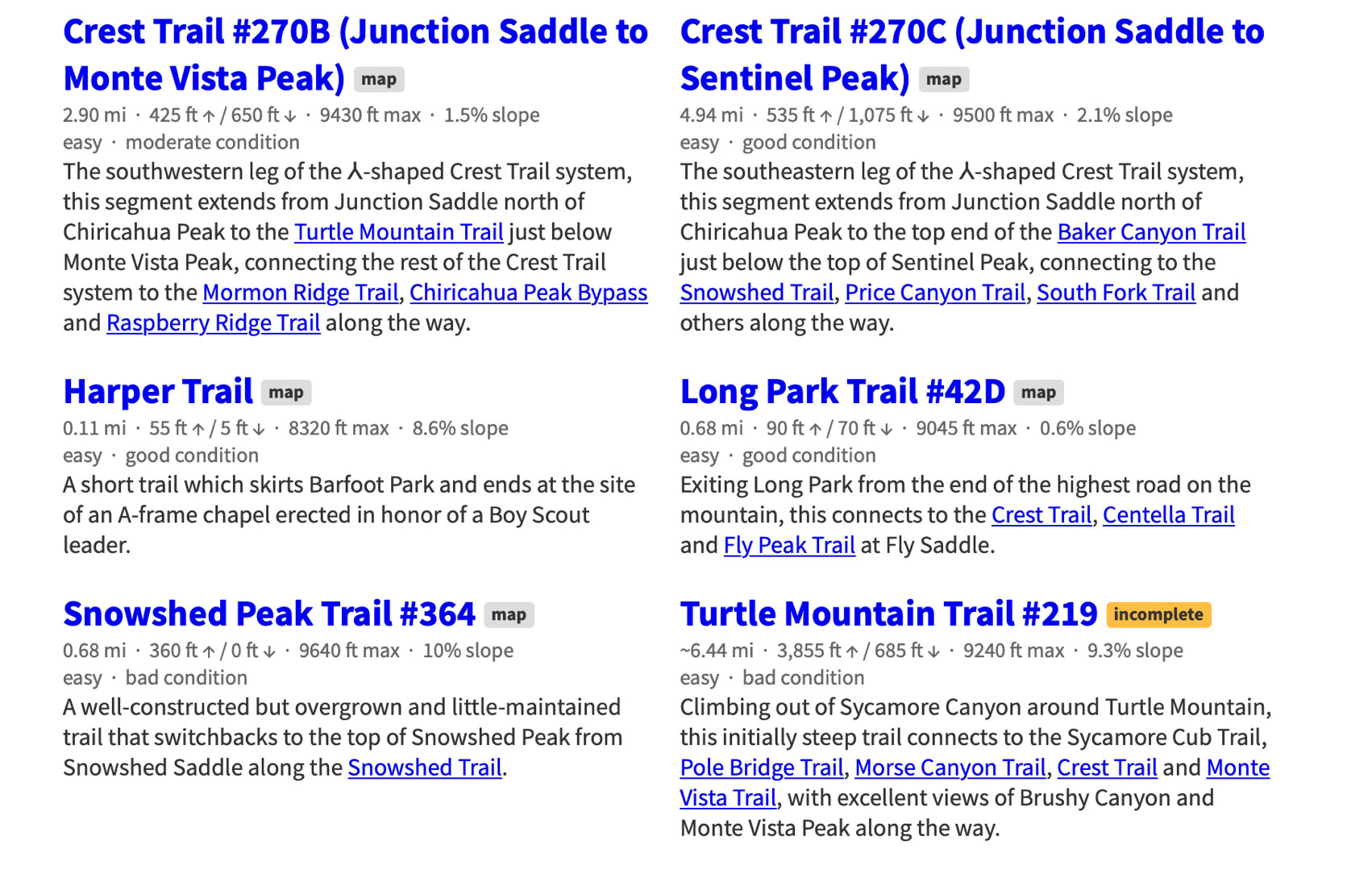
Moderate Trails
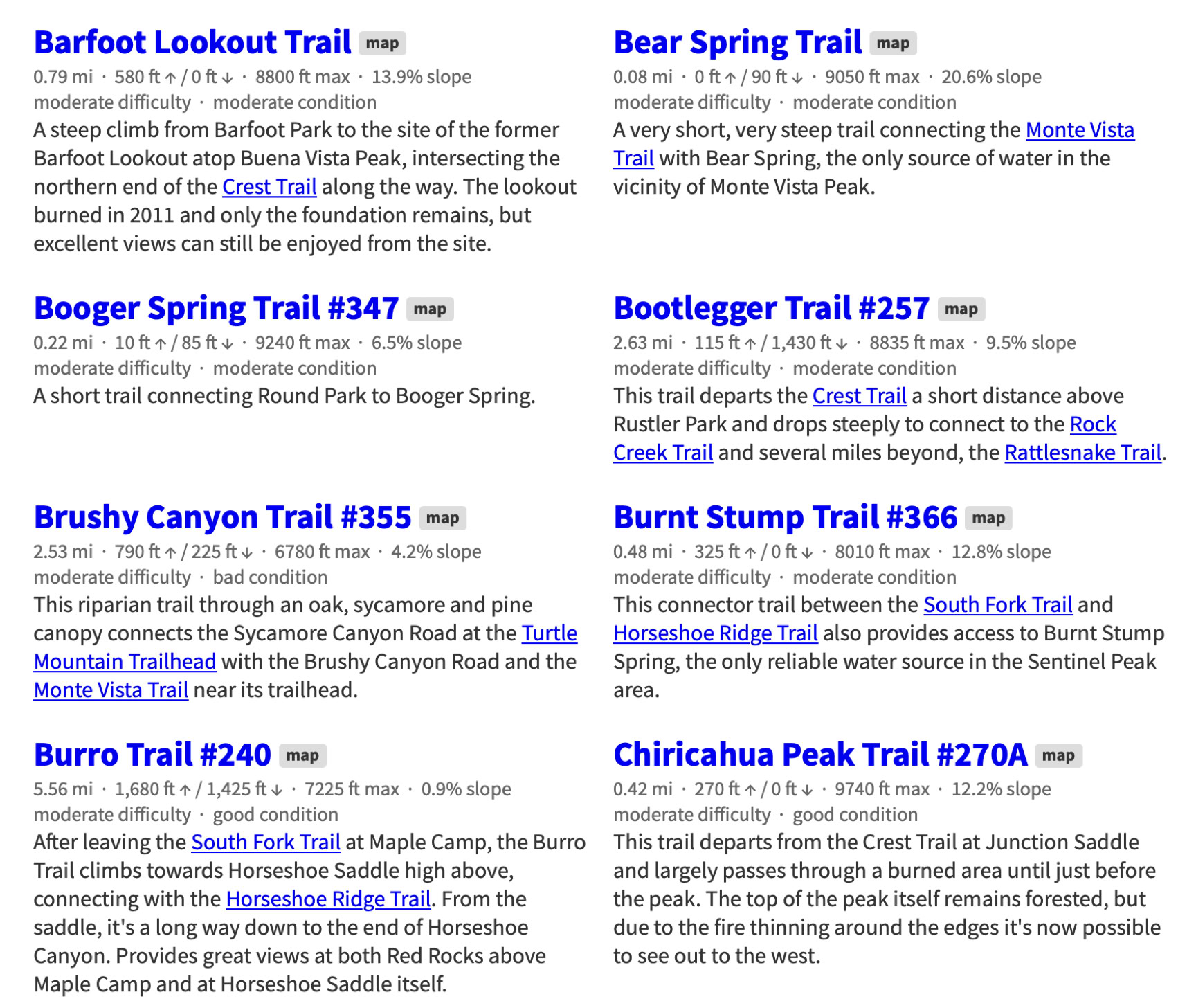
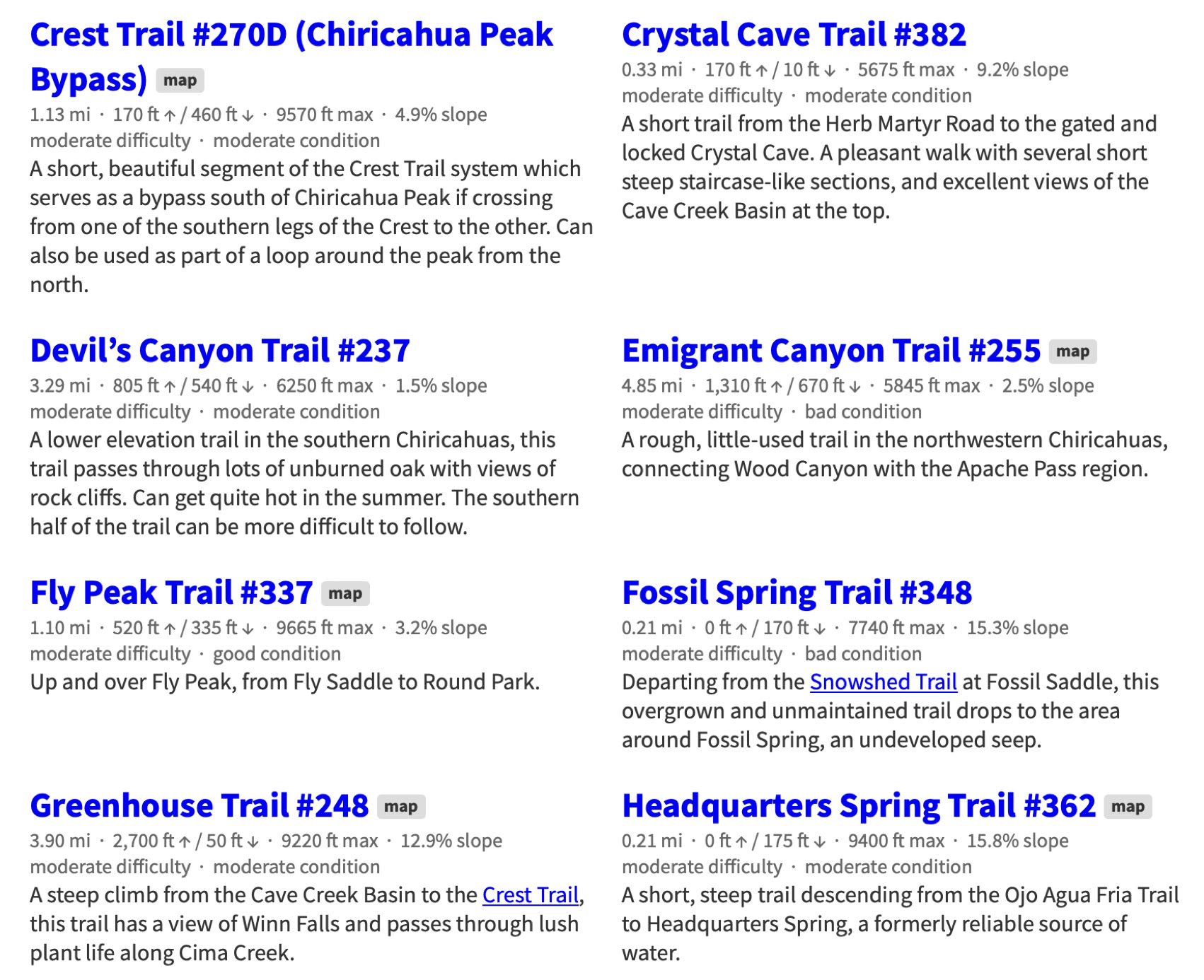
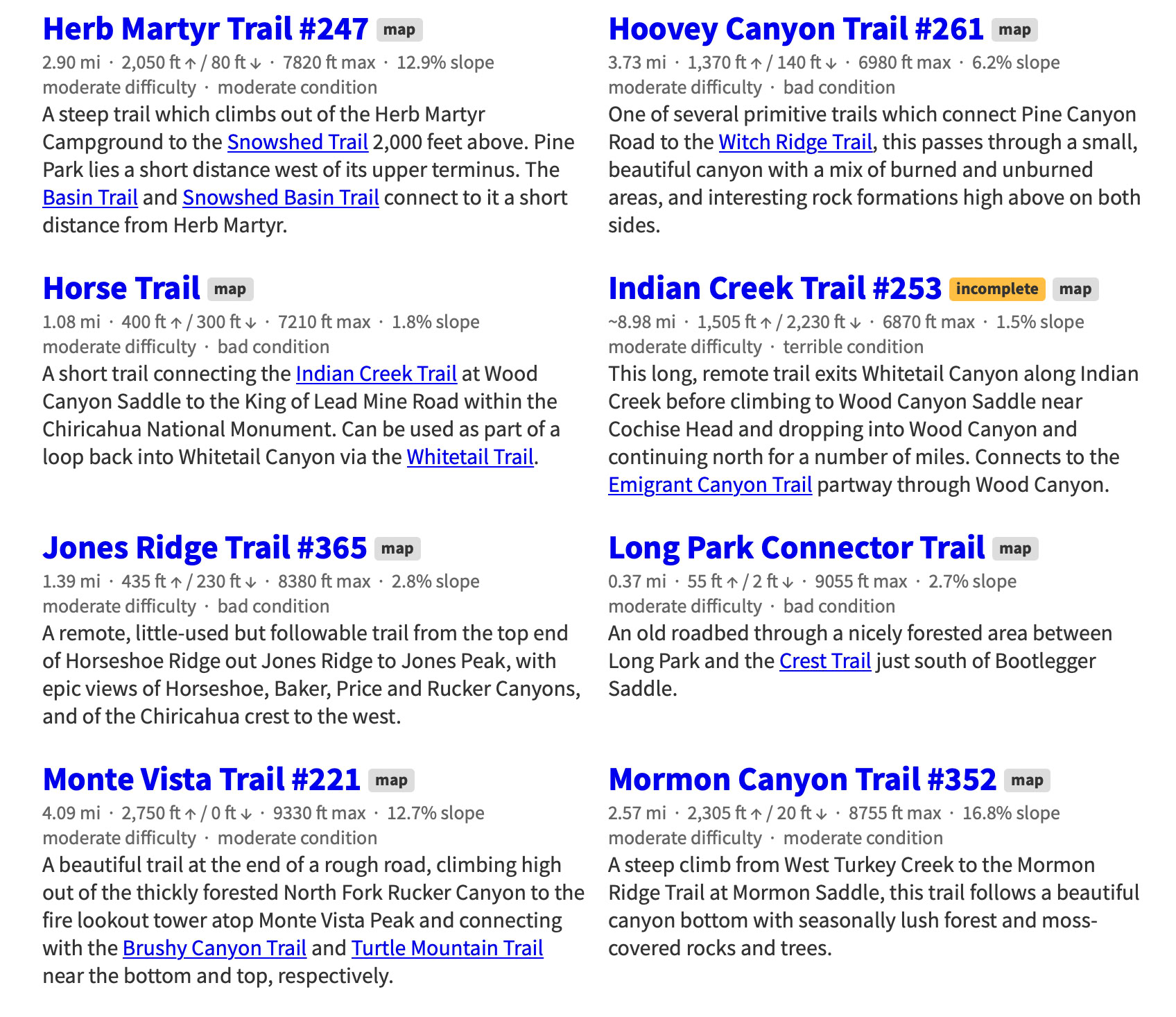
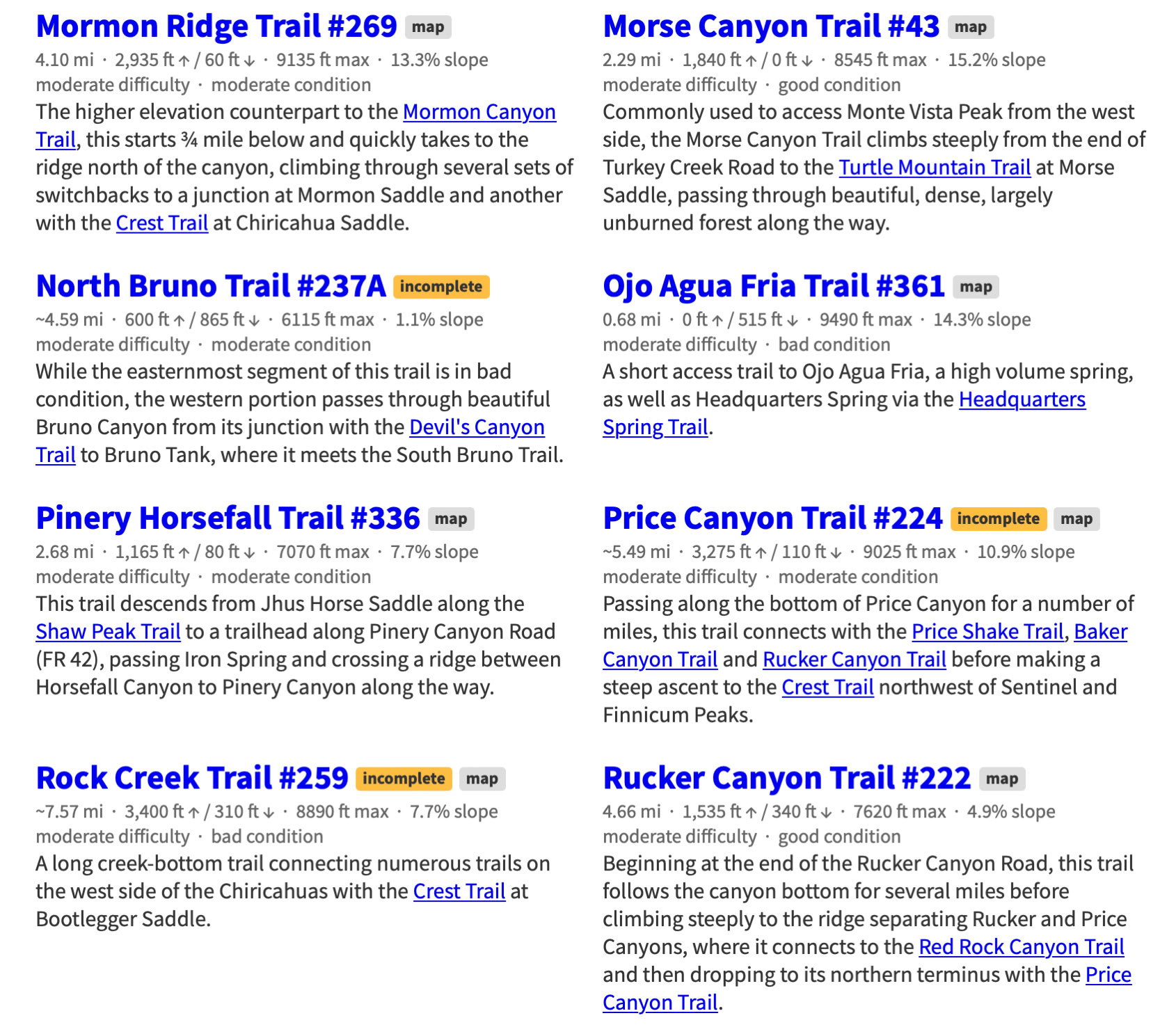
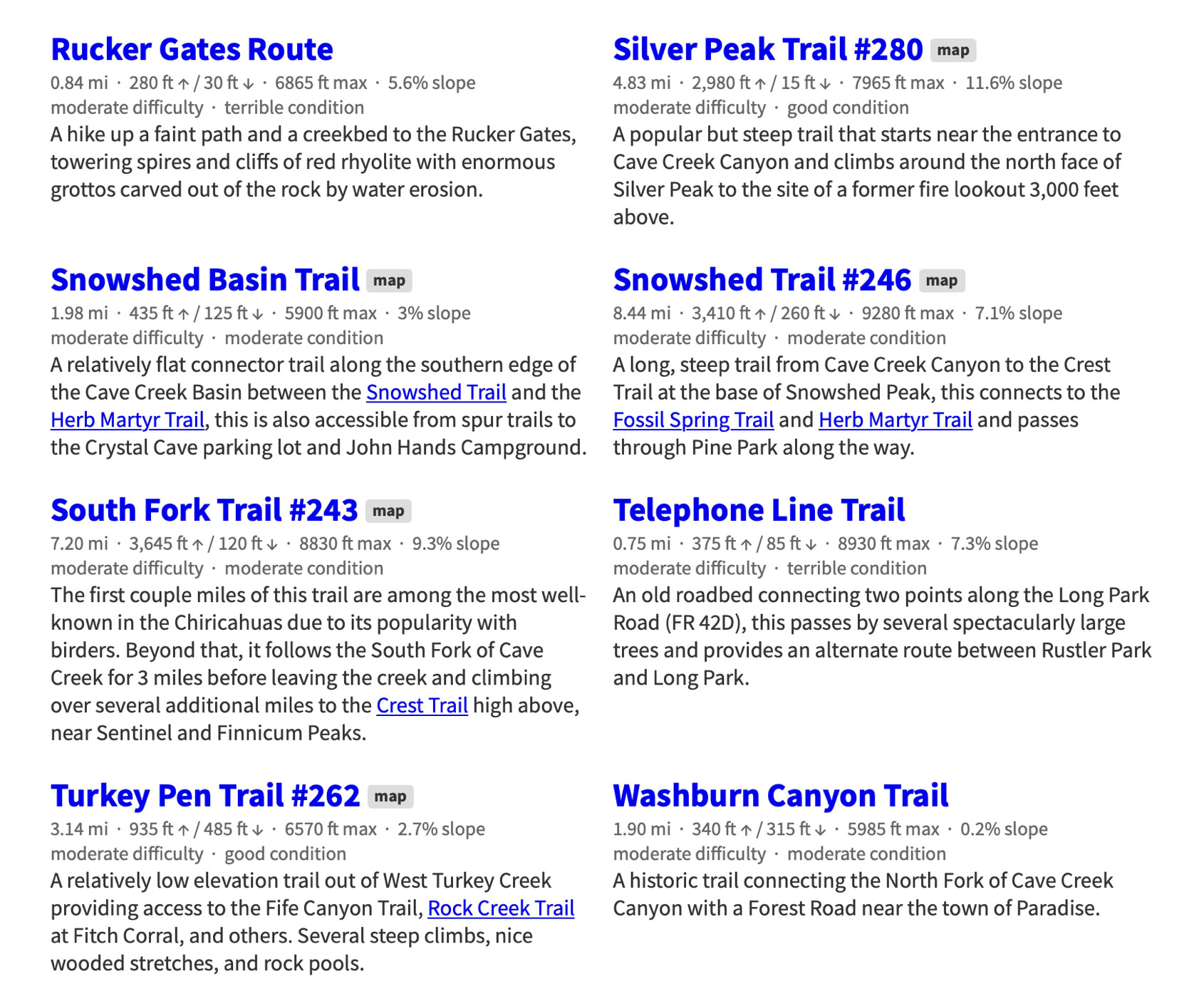

Difficult Trails
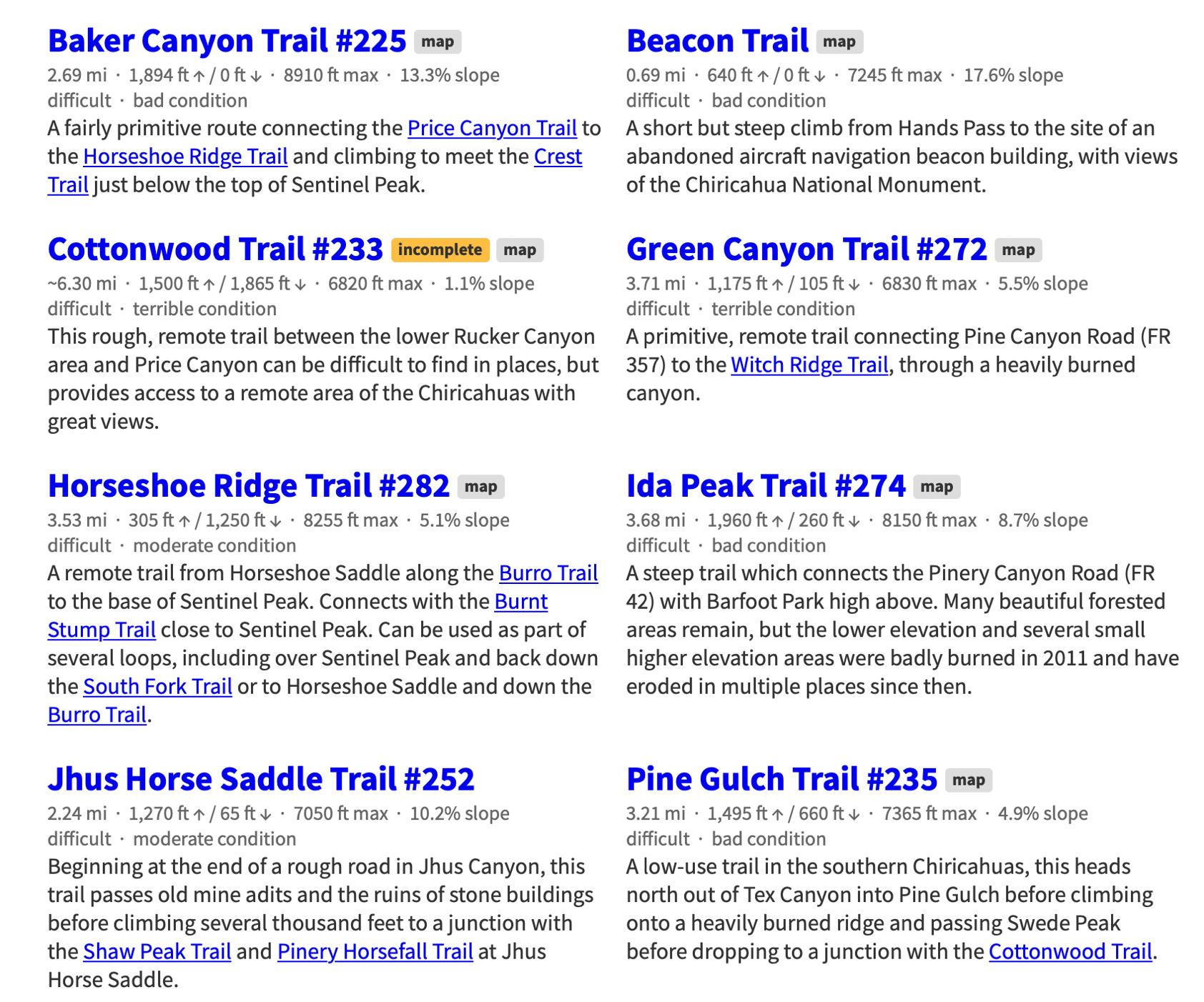
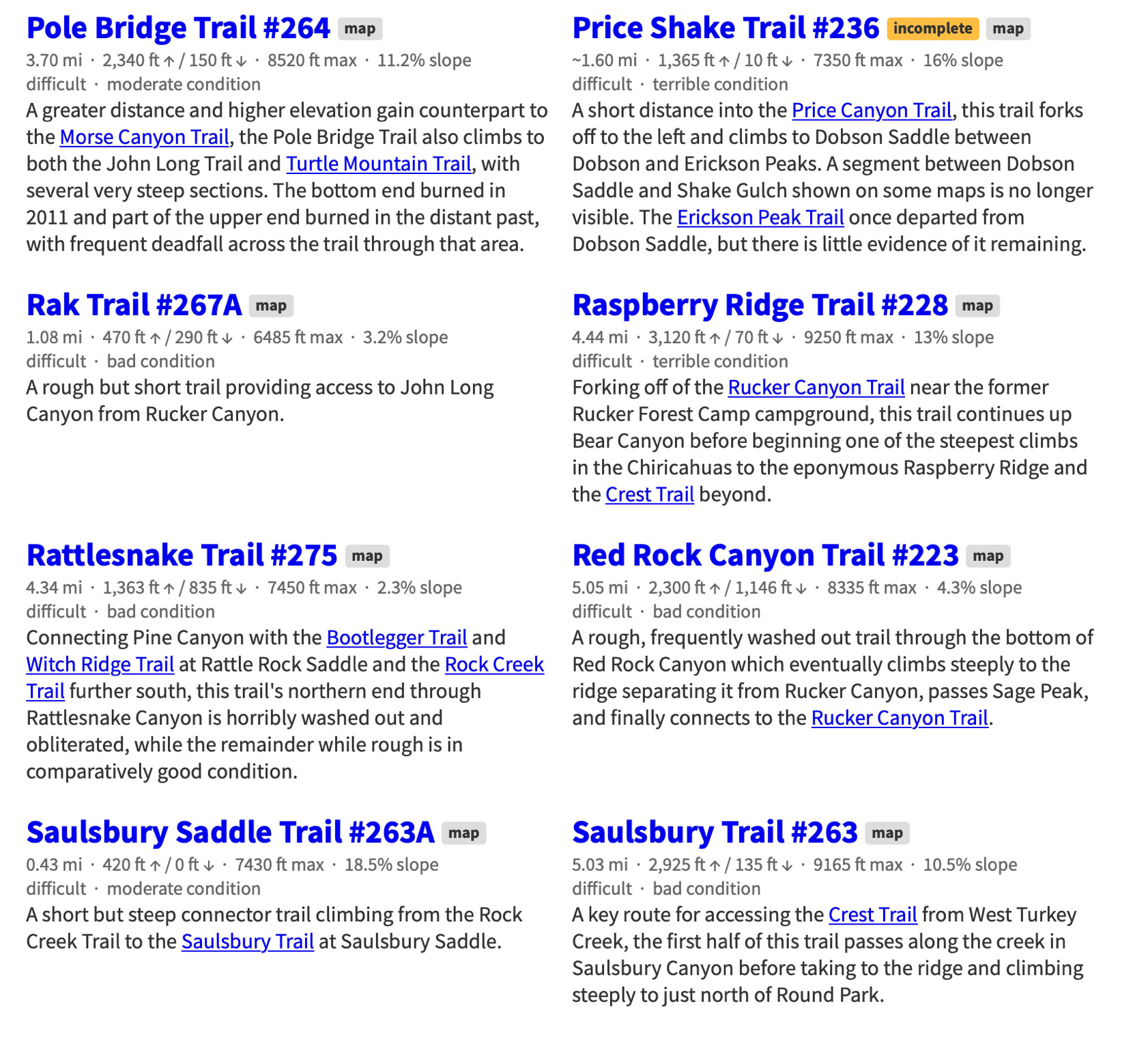
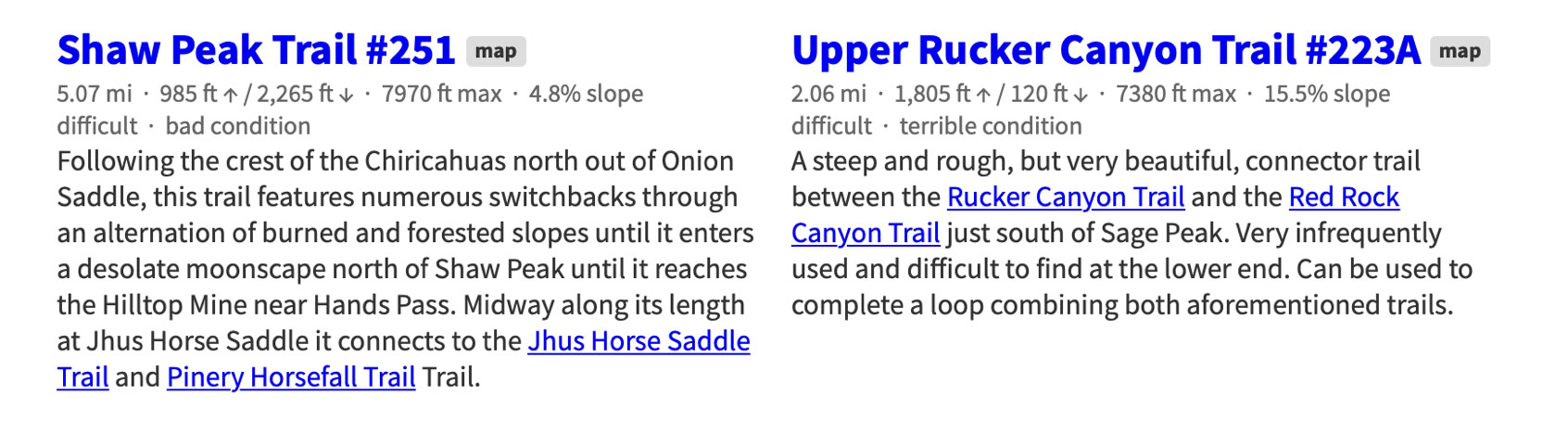
Expert Trails
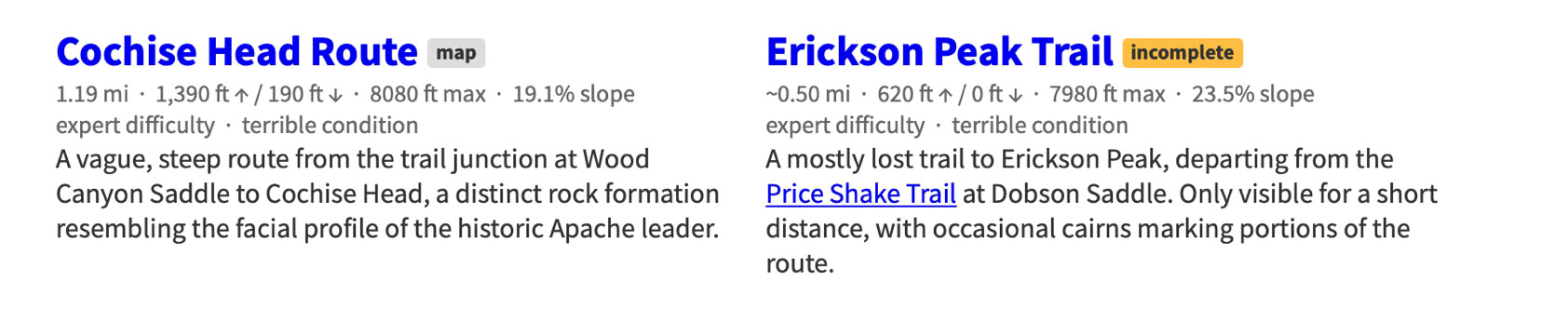
Chiricahua Mountain Hiking Trails
This project -a Herculean task - was started by Jonathan Patt as a collection of GPS data recorded while hiking in the Chiricahua Mountains of Southeastern Arizona starting in 2012 and expanded slowly into this site over a six month period beginning around 2013, during which it became obvious that much of the existing Chiricahua hiking information is out of date and, for some trails, nonexistent. This site is an attempt to resolve that problem.
If you would like to see a map of these trails or want more information about the project visit the Chiricahua Mountains Hiking Trails web site at:
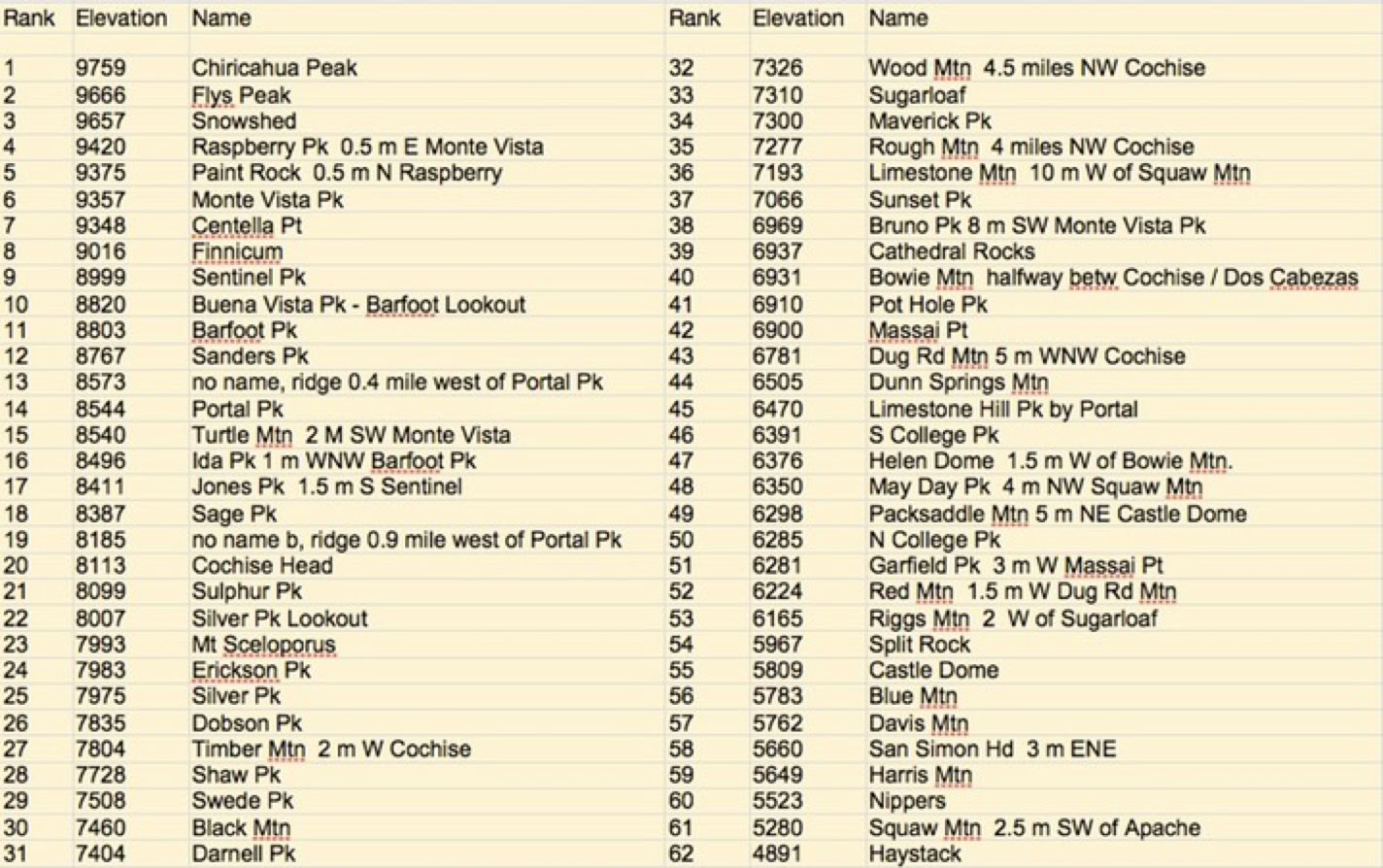
The 62 Highest Peaks, Mountains, Hills, And Lookouts In The Chiricahuas
(Tabulated by Ray Brooks)
(Form Necessary To Work With Trail Crew)
Download - Complete - Mail
To volunteer with the US Forest Service, fill out an application. If accepted, a Volunteer Service Agreement specifying the task(s) will be sent to you.
DOWNLOAD THE FORM. Print it, fill out, sign in block 23, and date. You can scan a signed document and e-mail it toArmando Arvizu at: armando.arvizu@usda.gov
You can also mail the form to Armando at the Douglas Ranger District Office:
1192 W. Saddle View Rd. Douglas, AZ 85607
People can join the list automatically by sending an email to portal-rodeo-hiking+subscribe@googlegroups.com and they should start receiving messages.